The mix of birds at a Canadian feeder changes with the seasons. A handful of hardy residents stay all winter, while others pass through on migration or arrive only when the snow does. These notes focus on the species most people see from a kitchen window.
Year-round residents
Resident species are the backbone of a winter feeder. They do not migrate, so they learn a reliable food source quickly and return to it daily.
Black-capped chickadee
Small, curious, and vocal, the black-capped chickadee is one of the most widespread feeder birds in Canada. It typically grabs a single seed and flies off to open it on a nearby perch rather than lingering. Listen for its two-note whistled call and the namesake chick-a-dee scold.
White-breasted nuthatch
Nuthatches forage by working down tree trunks head-first, which sets them apart from woodpeckers and creepers. They favour sunflower seed and suet and often cache food in bark crevices.
Seasonal and cold-weather visitors
Some birds appear mainly when the weather turns. Dark-eyed juncos, sometimes called "snowbirds," become common at ground level through the colder months across much of the country.
- Dark-eyed junco — ground feeder; scatter seed low and near cover.
- American goldfinch — duller in winter; drawn to nyjer and sunflower hearts.
- Blue jay — bold and loud; takes peanuts and larger seed, and may dominate a feeder.

Quick identification table
| Species | Size cue | Best clue |
|---|---|---|
| Black-capped chickadee | Very small | Black cap and bib, grabs one seed at a time |
| White-breasted nuthatch | Small | Climbs head-first down trunks |
| Dark-eyed junco | Small | Ground feeder, flashes white outer tail feathers |
| American goldfinch | Small | Bouncing flight, yellow tones, undulating call |
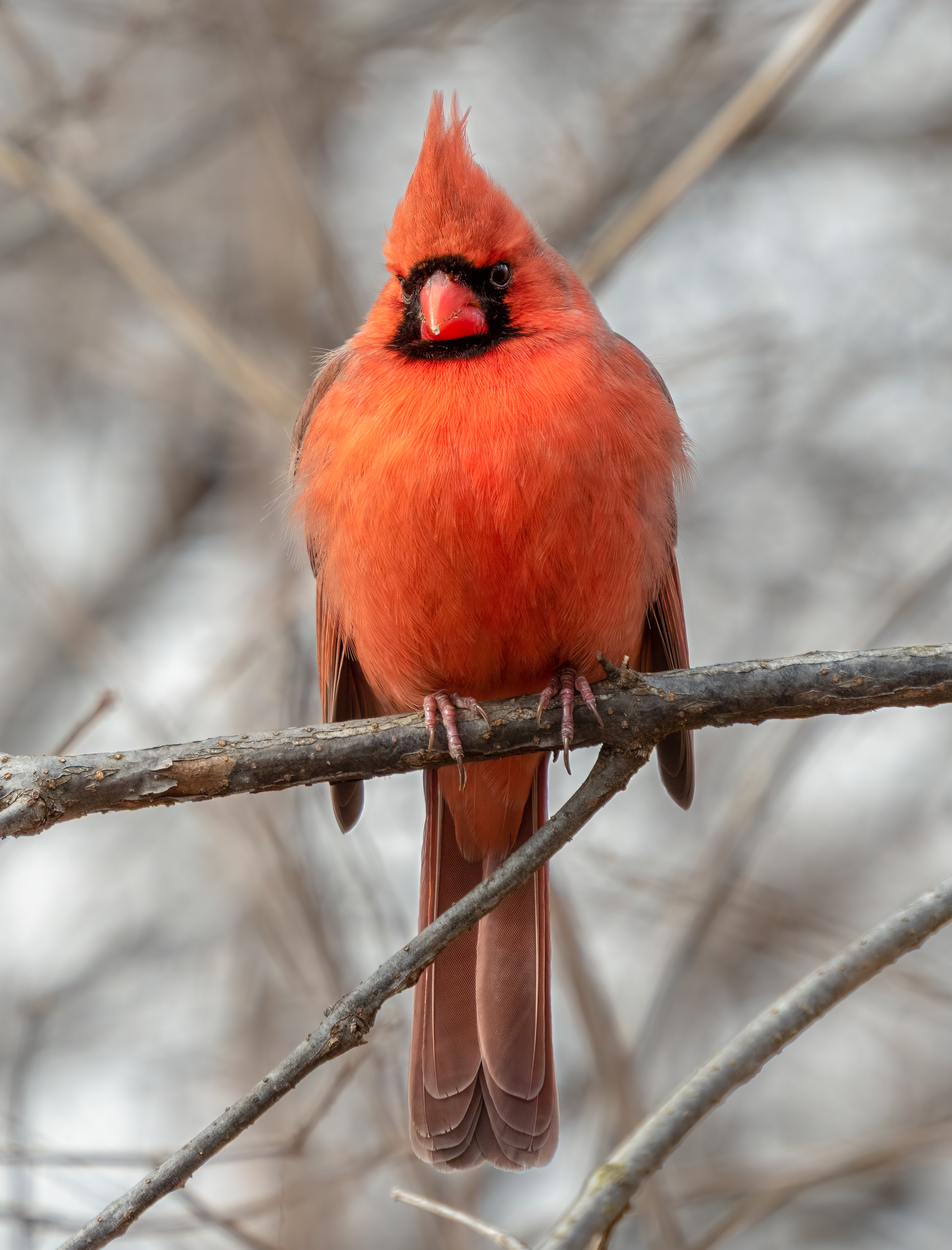
| Northern cardinal | Medium | Crest and heavy bill; male bright red |
Ranges differ widely between regions. The northern cardinal, for example, is common in parts of southern Ontario and Quebec but scarce or absent farther north and west. Check a regional checklist for your area.
Where to read more
For range maps and regional checklists, two reliable public references are Birds Canada and the species pages on Wikipedia.